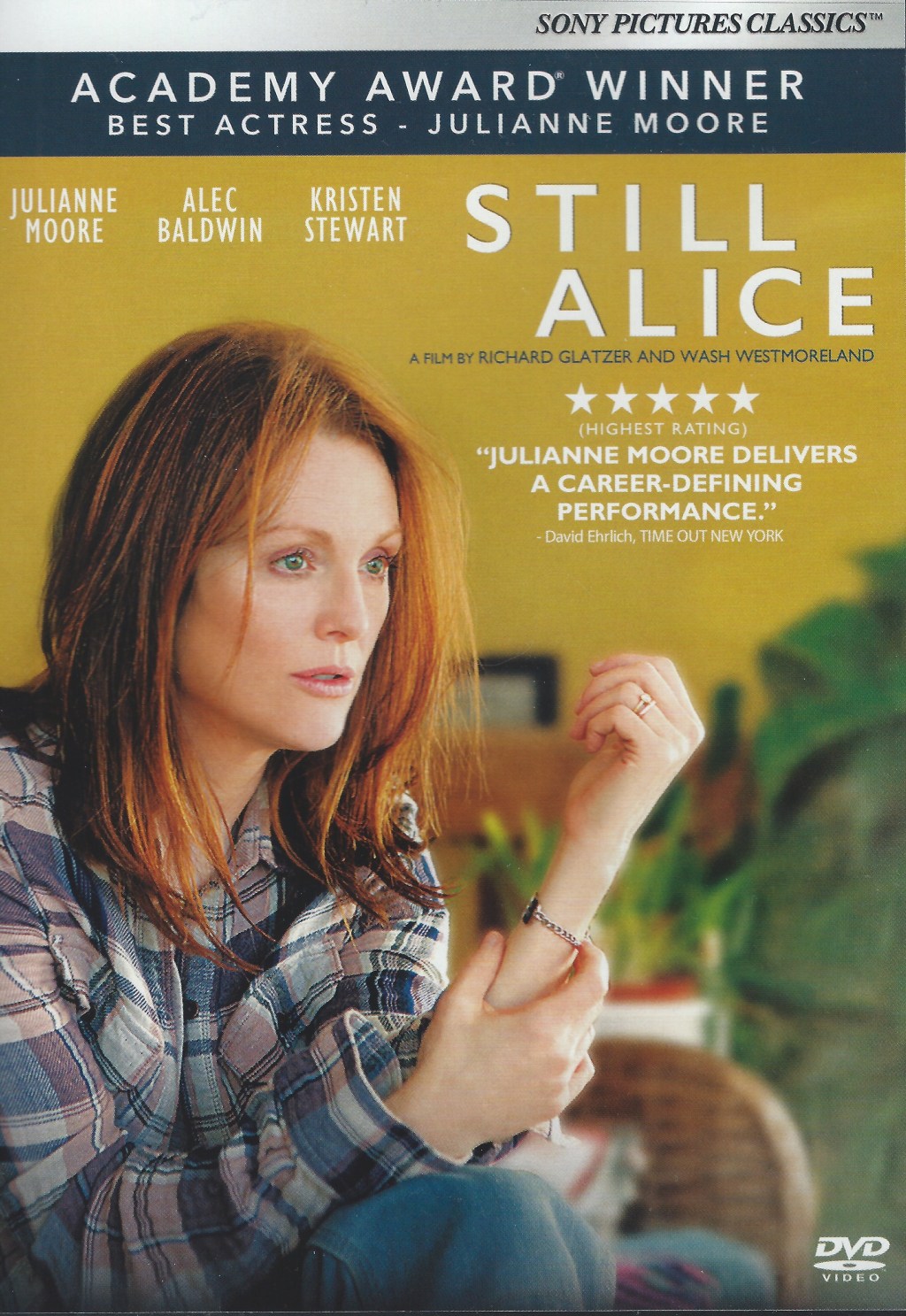
My quest to watch all of the 2014 Academy Award nominees was interrupted by NCAA March Madness, NHL Playoffs and Bryce Harper and the Washington Nationals, but I finally had an opportunity to watch the riveting performance of Julianne Moore, the Academy Award Winner for Best Actress, in the heartbreaking film Still Alice. After viewing this movie, it joins other unforgettable films concerning illness, such as Terms of Endearments, The Doctor, Life as a House and One True Thing (there are many more) that not only show the reality of illness, but also the personal and family struggles, pain and loss as lives are forever changed. This movie not only changed my perception of Julianne Moore as an actress, but my awareness of the fear, panic, and tremendous loss associated with Alzheimer’s Disease. Still Alice is about Alice Howland (Julianne Moore), a brilliant linguistics professor at Columbia University with a wonderful family who is diagnosed with Early Onset Alzheimer’s Disease. While Alice’s wonderful family, husband John (Alec Baldwin), son Tom (Hunter Parrish), daughter, Anna (Kate Bosworth), and youngest daughter, Lydia (Kristen Stewart), are present throughout the movie, the film solely belongs to Julianne Moore’s portrayal of Alice and the terrifying struggle of living with Alzheimer’s. The movie and performance by Moore provide a powerful glimpse of a woman “mastering the art of losing” and through very emotional and significant scenes you witness the devastating losses of a woman who loses not only her career, but the ability to protect her children from the illness, answer basic questions (the butterfly folder), perform basic tasks, recognize loved ones and words, and the loss of extra precious time to savor every moment before all she knows is lost when the disease progresses rapidly. The movie gives an excellent portrayal of a family dealing with illness and the difficulties presented when a loved one is struggling and slowly disappearing while time and lives march on and that sometimes the best caretaker may be the most unexpected.
 CIMPLE - A Curious Introvert's Musings & Photos about Life and Enjoyment
Leave a comment